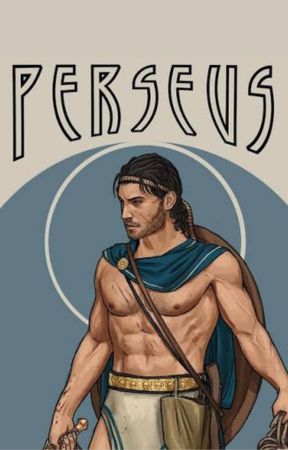
Perseus and Medusa: The Quest of a Young Hero
Long ago, on the sun-kissed island of Seriphos in ancient Greece, lived a brave young man named Perseus and his kind mother, Danae. They were simple, peaceful folks who lived in a small cottage near the sparkling blue sea. Though they did not have vast riches or grand gold coins, their lives were full of warmth, laughter, and hard work.
However, the peace of their island home was threatened by the island’s ruler, King Polydectes. The king was a selfish, proud man who cared only for himself. He wanted to marry Danae, but Perseus knew the king was not a good man and protected his mother from Polydectes’ cruel demands. This made the king furious. He wanted to get rid of Perseus once and for all, but he knew the young man was far too popular with the islanders to simply send away.
So, King Polydectes devised a sneaky plan. He announced a grand feast at his marble palace, inviting all the nobles and heroes of the realm. Every guest was expected to bring a grand gift for the king—a fine stallion, a chest of silver, or delicate silk robes.
When Perseus arrived at the banquet, he saw the noblemen handing over magnificent horses. Perseus’ heart sank. Being poor, he had come with empty hands.
Seeing Perseus standing there embarrassed, King Polydectes laughed aloud for all the hall to hear. “Look at Perseus!” the king mocked. “He comes to my table and offers nothing! Is this how a hero honors his king?”
The guests giggled and whispered. Perseus felt his cheeks burn with embarrassment, but his pride was strong. He stood tall, looked the king in the eye, and spoke rashly: “I may not have gold or horses, Your Majesty, but I have courage! Name any gift you desire, and I shall bring it to you—even if it is the head of Medusa the Gorgon!”
The hall went dead silent. King Polydectes grinned wickedly. This was the exact opportunity he was waiting for. “A bold promise!” the king boomed. “I accept! Bring me the head of Medusa, or never return to Seriphos again!”
Perseus left the palace into the cool night air, his heart heavy. He realized what a terrible mistake he had made in his anger. Medusa was not an ordinary monster; she was one of the three Gorgon sisters who lived beyond the known world, deep within a dark, foggy realm.
Once a fair maiden, Medusa had been cursed by the gods. Now, living snakes slithered and hissed atop her head instead of soft hair. Her skin was a sickly green-gray, she had sharp bronze claws, and large golden wings sprouted from her back. But worst of all was her curse: any living creature—man, woman, or beast—that looked directly into Medusa’s glowing yellow eyes would instantly freeze and turn into cold, solid stone.
“How can I defeat a monster I cannot even look at?” Perseus wondered aloud as he walked along the dark beach. He sat on a stone, watching the ocean waves crash against the shore, feeling completely hopeless.
Unknown to Perseus, the gods on Mount Olympus had been watching the young hero. They knew King Polydectes was wicked, and they admired Perseus’ bravery and devotion to his mother.
Suddenly, a bright, golden light illuminated the beach. Out of the radiance stepped two majestic figures. One was a tall, regal woman wearing armor and carrying a spear—Athena, the goddess of wisdom. Beside her stood a tall young man with a wide-brimmed hat and a magical staff wrapped with serpents—Hermes, the swift messenger of the gods.
“Do not despair, Perseus,” Athena said, her voice calm and strong like thunder in the distance. “Your cause is just, and you shall not face this peril alone. But courage by itself will not defeat Medusa. You will need wisdom and divine help.”
Athena unclasped her own shield—a huge, round bronze shield polished so brightly that it glistened like a brilliant mirror. “Take this,” she instructed. “When you face Medusa, never look at her directly. Look only at her reflection in this bronze surface. As long as you look at her reflection, her curse cannot harm you.”
Next, Hermes stepped forward with a smile. “You will need speed and a sharp weapon, young hero.” Hermes handed Perseus a beautifully curved sword made of indestructible adamant, capable of cutting through the toughest scales. Then, Hermes unbuckled his own winged sandals and placed them at Perseus’ feet. “These sandals will allow you to run upon the wind and fly higher than the eagles.”
Finally, the gods told Perseus he must seek out the Graeae—three ancient, gray sisters who shared a single eye and a single tooth between them—to find the exact location of Medusa’s secret lair. With a flash of golden light, the gods vanished, leaving Perseus with the powerful magical artifacts.
Perseus laced up the winged sandals, gave a gentle leap, and felt himself lifted up into the night sky! He soared over oceans, mountain ranges, and barren deserts.
First, he flew to the misty, twilight land of the Graeae. Flying silently above the three groaning old sisters, Perseus waited for the exact moment when one sister took out the shared eye to hand it to another. Swiping through the mist, Perseus snatched the eye out of mid-air!
“Give us back our eye!” the sisters wailed, reaching out with withered hands.
“I will return it,” Perseus called out, “only if you tell me where to find Medusa the Gorgon!”
Desperate to see again, the gray sisters revealed the secret path across the edge of the world to the dark island of (Sorgon/Gorgon island). Perseus tossed the eye back to them and took off into the sky once more.
He flew past stormy seas until he spotted a jagged, desolate island covered in thick black fog. Flying low, Perseus landed soft as a feather at the mouth of a damp, looming cavern.
As he walked toward the cave, his stomach twisted. Scattered all across the rocky ground were eerie, frozen statues of knights, warriors, and wild beasts. Their faces were twisted in horror, frozen in place forever because they had glanced at Medusa’s face.
Perseus drew his sharp, curved sword and raised Athena’s bronze shield before his face. He turned his back to the cavern’s entrance and began walking backward into the dark cave, staring intently at the polished bronze reflection.
The air inside was cold and smelled of sulfur. From deep within the shadows, Perseus heard a horrifying sound—the slithering rustle of scales and the angry, sharp hiss of dozens of venomous snakes!
Hisssss…
Medusa was awake!
Perseus’ heart pounded against his ribs like a drum. He held the mirror-shield steady. Through the reflection, he saw a dark shape moving toward him. The yellow-eyed monster crept closer, her snake-hair twisting and striking at the air.
“Who dares enter my domain?” Medusa rasped, her voice echoing off the damp cave walls. “Turn around and look upon me, little hero!”
Perseus kept his eyes glued to the shiny shield. He saw her reflection getting larger as she slithered right behind him. The snakes hissed loudly, snapping just inches from his shoulders!
Waiting for the perfect moment, Perseus tracked her reflection as she leaned in close. With a deep breath and a surge of courage, Perseus raised Hermes’ curved sword over his shoulder. Using only the reflection in the shield to guide his arm, he spun around and swung the sword with all his strength!
With one swift strike of the sharp blade, the monster was defeated. Perseus kept his eyes cast downward at the ground, pulled out a thick cloth sack he had brought with him, and carefully placed the head inside, tying the drawstring tight so no one could ever accidentally look into her eyes.
Using the winged sandals, Perseus flew back across the sky, over the ocean waves, and straight back to the island of Seriphos.
He arrived at the royal palace just as King Polydectes was throwing another wild banquet. The king was sitting on his golden throne, bragging to his guests about how he had tricked young Perseus into going on a foolish quest from which he would never return.
Suddenly, the heavy wooden doors of the palace slammed open!
The hall fell silent. There stood Perseus, covered in dust from his long journey, carrying a heavy, bloodstained cloth bag.
King Polydectes turned pale for a second, but then he forced a loud, cruel laugh. “You return?” the king snorted. “You bring an empty bag to fool me! You are a coward, Perseus! You never fought the Gorgon!”
The king’s guards laughed along with him. Perseus stood tall and calm in the middle of the hall.
“I have kept my word, Your Majesty,” Perseus declared firmly. “You asked for the gift of Medusa… and now you shall have it! Everyone who values their life, turn your eyes away!”
The noblemen and servants quickly covered their faces or turned toward the walls. King Polydectes sneered, refusing to look away. “Show me your fake treasure!” he demanded.
Perseus reached into the sack, kept his own eyes squeezed shut, and raised Medusa’s head high into the air!
King Polydectes glared at the monster’s face. In an instant, the color drained from the king’s skin. His mocking smile froze, his eyes turned gray and dull, and his whole body hardened into cold, solid gray stone. The cruel king was now nothing more than a statue, trapped forever in his own foolish pride.
Perseus quickly put the head back into the heavy bag and secured it tight. With King Polydectes gone, the people of Seriphos cheered for Perseus, free at last from the king’s unjust rule.
Perseus reunited with his mother, Danae, wrapping her in a warm hug. Knowing he had completed his quest, Perseus knelt and thanked the gods. Hermes returned to Mount Olympus with his winged sandals and sword, and Athena placed Medusa’s image onto her own great armor as a symbol of protection and victory.
Perseus went on to become a great, wise, and noble leader who ruled with kindness and justice for many years. His legendary quest proved to the world that brute force was no match for cleverness, bravery, and a pure heart.






![[Woodpecker] Ang Alamat ng Batuktok](https://www.mgakwentongbayan.com/wp-content/uploads/2022/04/batuktok.jpeg)